Mud & Microchips · August 2026
The Crew You Actually Want — a Mud & Microchips series for construction and restoration owners hiring in a Gen Z labour market. Post 4 of 4.
They Don’t Leave for More Money. They Leave Because Nothing Changed.
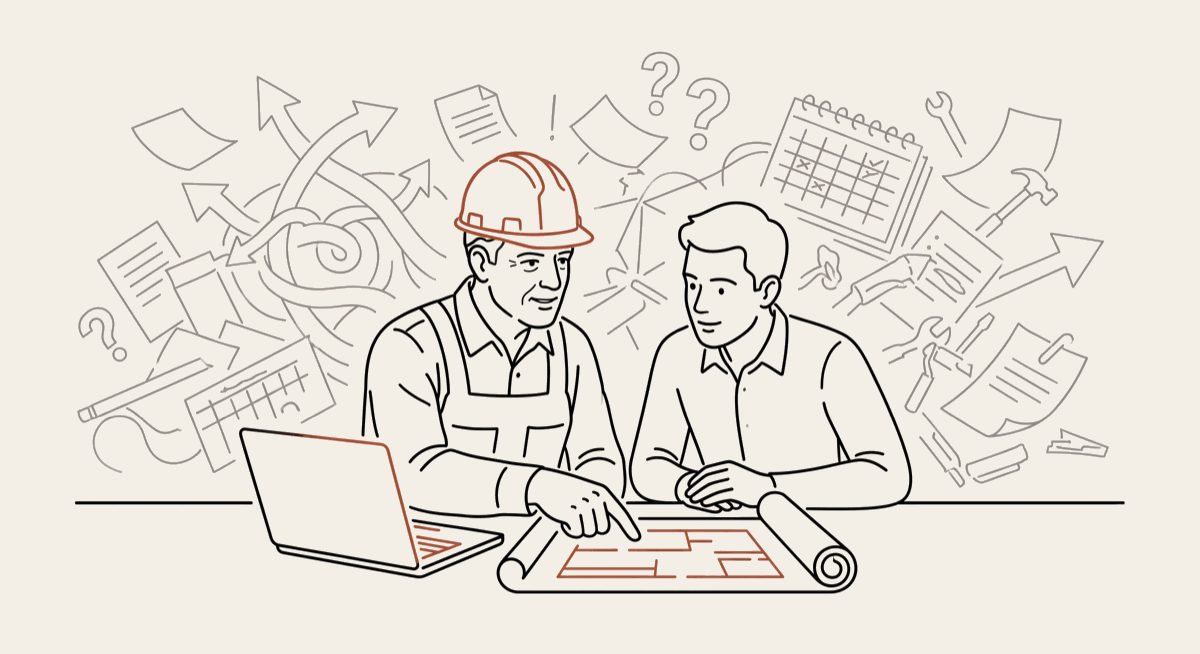
It’s the unfulfilled promises. When a candidate sits across from you in the interview, they’re being sold a vision: how they’ll grow with the company, where this role can take them. Then they start, and task after task, they watch their ideas go nowhere. “We’ve done it this way forever.”
So after a year, they already know they won’t get promoted. And when they leave and you ask why, they’ll say something about money, because money is the easy answer. But it’s rarely the true reason.
It starts with the smallest thing: hearing them out
The fix is smaller than you think. It starts with an owner or a manager actually hearing out a new hire’s ideas. They’re new to the industry, yes. But giving them the chance to articulate their ideas gives them a sense of agency. And here’s the part you can benefit from: as someone new coming into an old structure, they can actually see more than your team members who’ve been there for years. They can have good solutions to old problems, precisely because they’re new.
Nothing changes if you won’t implement change
We’re holding your hand (metaphorically) when we say it: nothing will change if you won’t implement change. We’re talking about once a week. If you can’t delegate a few tasks to free yourself up to spend that hour with a new hire, you won’t build a team you can trust with start-to-finish work in five years. If that’s not you, then free up one of your experienced people to mentor them instead.
Our industry’s biggest problem right now is knowledge transfer. And there’s no shortcut. You do it by setting time aside for training, mentoring, and feedback. That’s the whole job.
Two shops the same size but only one can hire
It took the first owner ten years to build a business he can leave. He can go on vacation for three weeks and trust his team to deliver until he’s back. He’s okay with smaller revenue for that trust. But the team is old: very experienced, and still working pen to paper. Bringing in someone new is almost impossible, because training them means the new hire watching a seasoned employee and pretending they know what they’re doing. And the owner already knows the truth: if he won’t implement some new systems - even just software that makes the paperwork easier - he’ll have to sell the business in the next five or ten years (and won’t get much for it).
Then there’s a company the same size, only five years old. Solid contact list, good references. But they’re already documenting their processes as they build them because they know that before they bring in a new hire, they need a way of explaining how things are done in their business. So they chose to hire someone to help them with SOPs and systems instead of doing it all themselves.
Why it hits harder with Gen Z
We always say this generation was born with the phones in their hands. Maybe that’s a stretch, but they were surrounded by technology from their early years, and “we’ve always done it pen and paper” is simply unacceptable to them. Once you’ve seen how a simple piece of software makes your work better, why would you refuse to use it? Yes, it takes time to learn, especially for more mature field people. It’s still worth it. Technology gives you smoother processes, better visibility, and better decisions. It’s necessary for the business to grow. And there are so many tools now that your team can definitely find something simple but effective that improves everyone’s productivity.
Start with you, next Monday
Keep a clean sheet of paper by you at all times. Write down every task you perform: every phone call, every data input, every app you open and what for. By Friday, you’ll have a list of every department you’re covering by yourself, even the ones you have people for. Over the weekend, with a fresh eye, look at the list again and ask:
- How many of these could I fully delegate to a new hire?
That’s when you’ll see the value of writing the manuals and checklists. Because once a new hire has them and is properly trained, those tasks get deleted from your list. And you can finally move on to the things you’ve had at the back of your head and never touched (marketing and business development being the top two we see busy owners always delaying).
Do not hire a new person into the chaos you already have. It’s going to be a nightmare of an experience for both sides.
It all starts with you
The whole series: the job ad, the interview, the first 30 days, keeping the good ones, none of it starts with the hire. It starts with you taking a wider angle on your own business and deciding where you actually want to take it. That's the decision that tells you which tasks to delegate, and how. Everything else follows from it.