Mud & Microchips · August 2026
The Crew You Actually Want — a Mud & Microchips series for construction and restoration owners hiring in a Gen Z labour market. Post 3 of 4.
The First 30 Days Are the Whole Game
You spent weeks on the job ad, sat through the interviews, made the offer. Then on day one you hand the new hire the worst possible onboarding process: “This is the job. Here are the tools. Figure it out.” If that sounds familiar, you're not going to like what we share here.
Before we dive into the details, let us get this straight: this process was always broken. Our industry just used to hire people who'd suck it up and stay anyway. In 2026, that’s not the labour market you're hiring in now.
What “Figure It Out” Actually Looks Like
A new person walks in. Maybe someone shows them a task once, quick, over the shoulder, because everyone's slammed. Then that person walks away and nobody checks back. No one watches them do it, no one tells them whether they did it right, no “close, but next time do this.”
Put yourself in their boots: a task, no confirmation if you're doing it correctly, and people on a team who expect you to already know. You conclude you're on your own. And being on your own, in a job you took specifically to learn, is a terrible place to be. That's the moment, usually in the first week or two, where a new hire already decides they're halfway out the door.
Why This Hits Gen Z Differently
A lot of owners have the same instinct: “I figured it out. Why can't they?” The honest answer is that “sink-or-swim” approach never worked. You just didn’t see it because the generation you were hiring had been trained to absorb it without saying a word. They created their own workarounds to avoid costly mistakes, they never felt there’s a space to ask questions so they never asked them. The rest was just.. hidden from the world, suppressed, bottled up.
What's different about Gen Z isn't that they're softer. It's that they expect a clear path, and their logic is hard to argue with. An entry-level job is, by definition, a job someone takes to learn. So when you hand an inexperienced person a task and expect them to figure it out alone, you've built a contradiction: you hired them to learn, then made learning impossible. They feel that even if they can't name it. So they leave because no path plus no support reads as a dead end.
The Work Starts Before the Job Ad Goes Up
If you want the first 30 days to go well, the real work happens before you ever post the role. You cannot onboard someone into a process that lives only inside your head or your best foreman's muscle memory. It has to exist on paper first and building that paper doesn’t have to be a giant project.
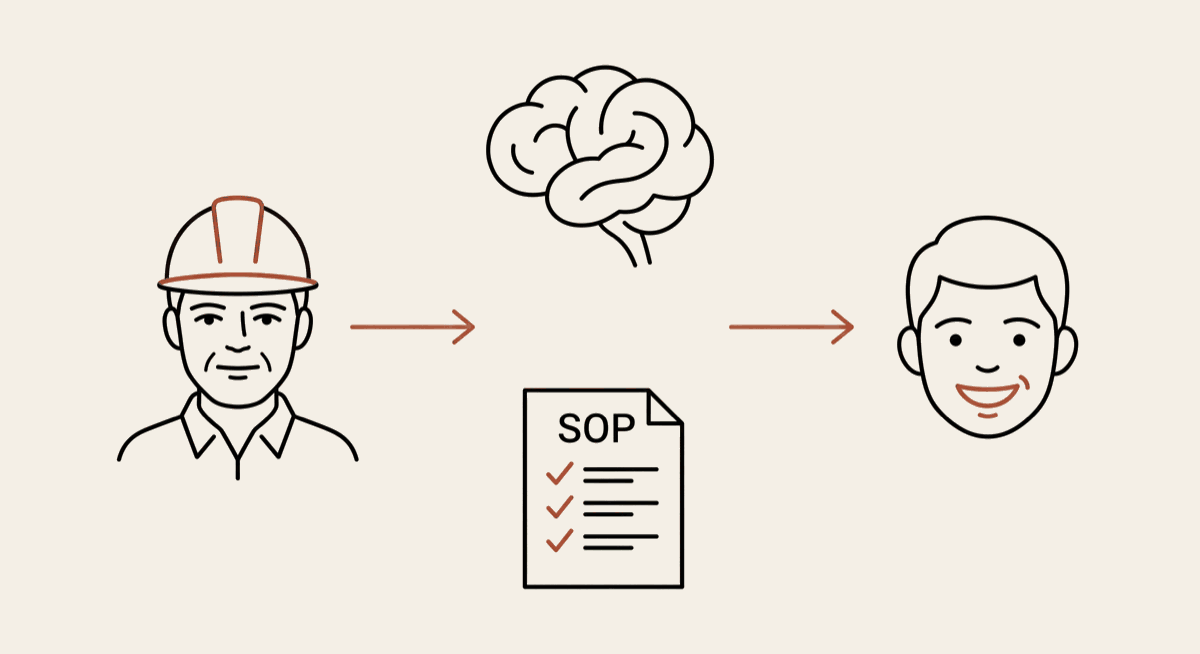
Whenever someone on your team does a task a new hire will eventually own, ask them to write down the steps as they do it - in the very moment, every step to start it, do it well, and finish it properly. That's a couple of extra minutes per task. Do it across the tasks a new hire will own and within a few weeks you've got real SOPs, written by the people who actually know how the work gets done.
Those SOPs (standard operating procedures) become the spine of your first three weeks. Hand them over but don't just assume the job's done. Sit down and make sure the person actually understands what they'll be doing, because reading a document and understanding a job are two different things. Then phase in the work slowly, and make sure you or a supervisor is watching what they produce and giving feedback on it.
The feedback cannot be a one-time thing. It has to be a rhythm. You already hold weekly meetings with your team; do the same for the new hire. Look at what they've done, tell them what's working and what isn't, and help them see the bigger picture of their role. That regular contact tells a Gen Z hire that there's a clear path with this company, and someone's invested in supporting them on that path. This is what an operations audit is built to surface, because if you can't delegate, you don't have a business. You have a job.
The Math on Getting It Wrong
If you're already slammed, this sounds like more work you don't have time for. So here's the real choice. On one side: a few evenings building SOPs, or a few paid hours. On the other: you skip it and run three trial months training someone with no documentation, no structure, no consistent feedback, only to discover at the end they didn't learn what they were supposed to, they're not a good fit, and along the way they made costly mistakes on live work, maybe even a health-and-safety situation, precisely because the right steps were never written down.
Add it up and you're looking at something around twenty thousand dollars gone before you even know the person wasn't right, and you're back at square one posting the same ad. Compare that to a hire who stays with you two or three years, performs well, and does it without you standing over their shoulder. Imagine hiring someone and training them so well that you can actually get good night’s sleep knowing that the tasks you delegated to them are going to be delivered top notch.
The Bottom Line
Start here: write down how the work actually gets done, one task at a time, before you ever post the ad. Hand it over. Make sure it landed. Then keep showing up with feedback on a regular basis. Do that, and you start building the crew you actually want.
Mud & Microchips helps construction and trades businesses implement AI that actually works — starting with an operations audit that measures where your hours go.